Why current solutions fall short
Nonprofits spend too much time managing donor mail, too much money on bad addresses, and too much risk navigating compliance requirements.

Receipt Burden
Manual tax receipt mailings eat staff hours every January.

Wasted Postage
Stale donor lists waste postage on undeliverable mail.

Compliance Risks
Most mail vendors do not understand 501(c)(3) compliance requirements.
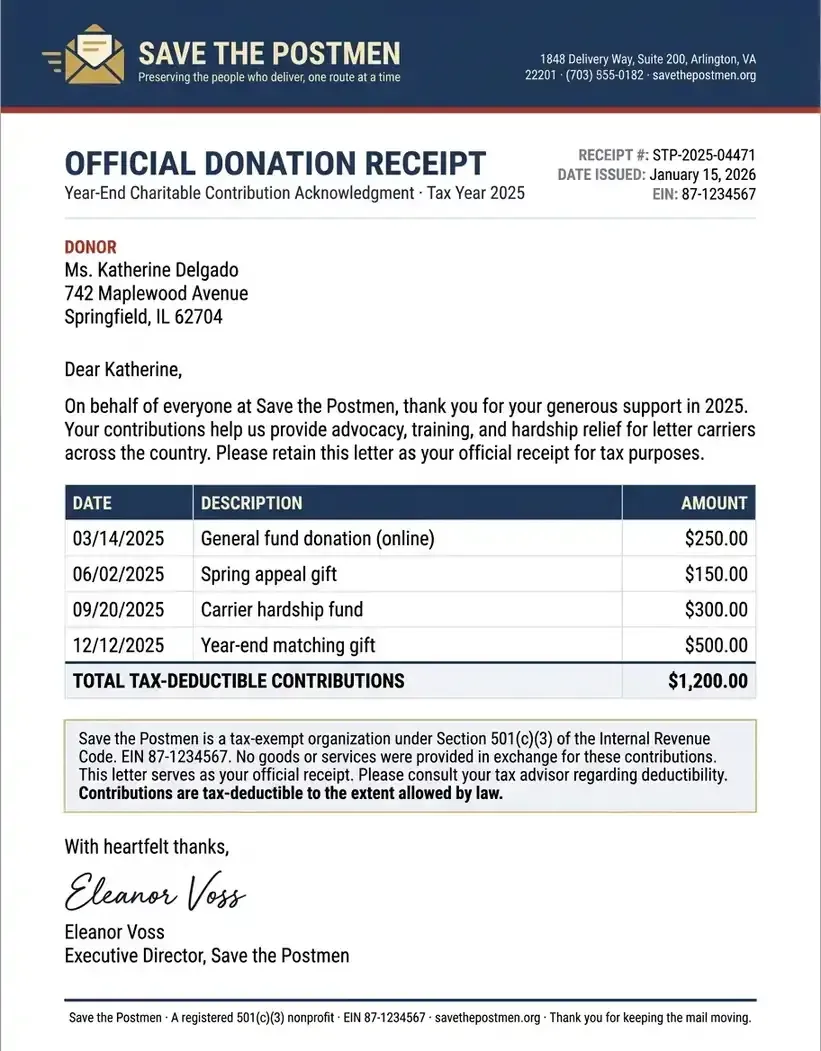
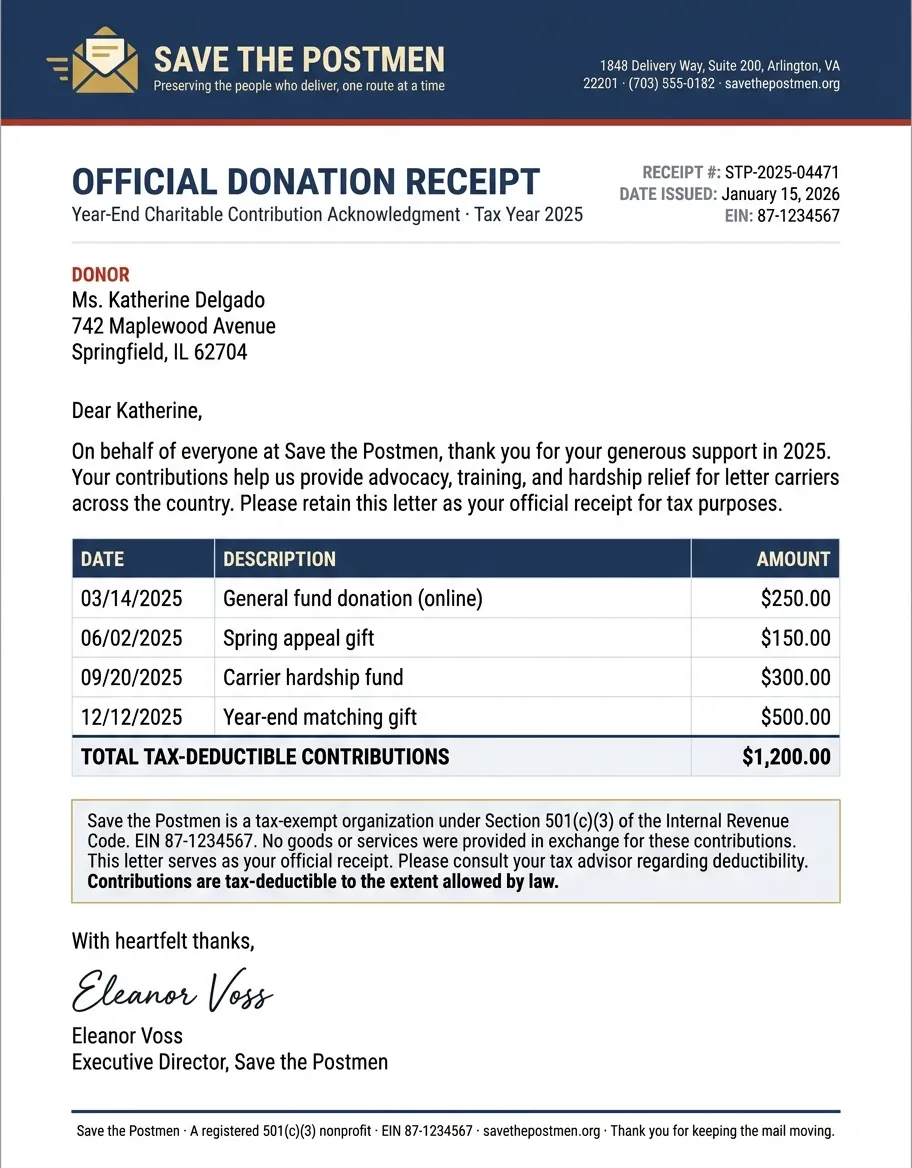
Donation tax receipts
Auto-mail an IRS-compliant acknowledgment letter the moment a gift posts to your CRM. Includes EIN, gift amount, date, and required disclosure language.
Year-end appeals
Schedule a December appeal letter to your full donor file, segmented by giving tier.

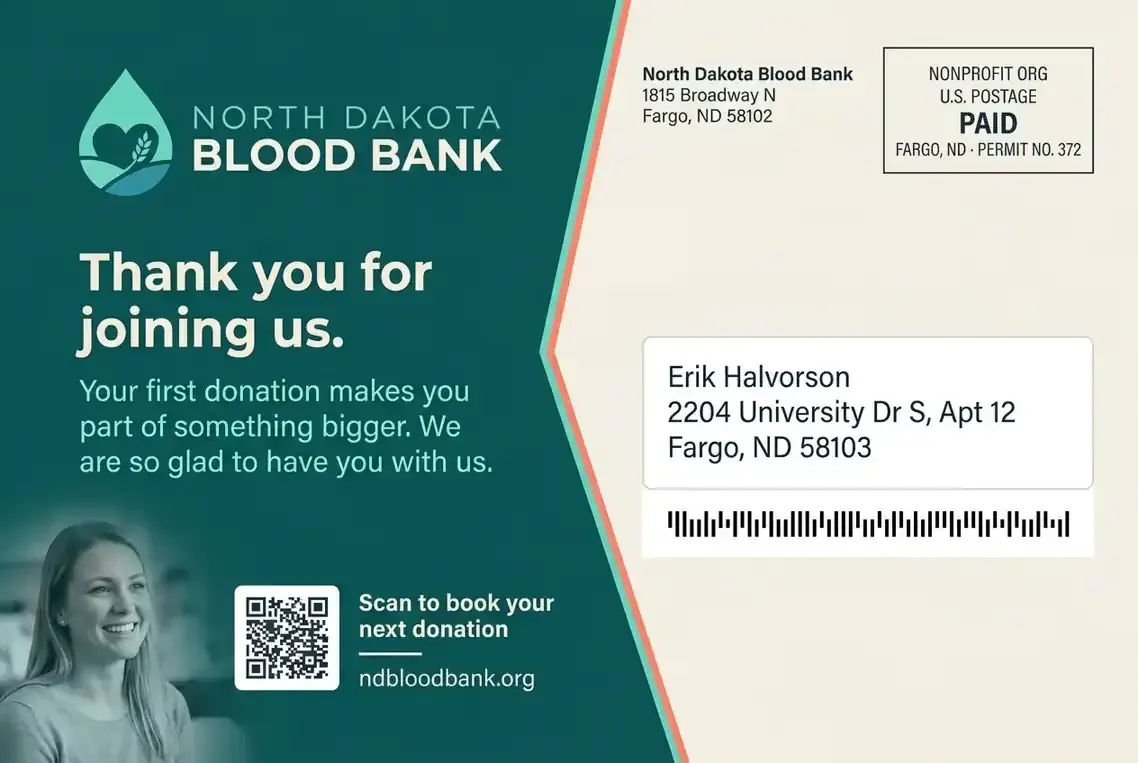
Donor welcome series
New donor gets a thank-you postcard within 48 hours, then a handwritten note from the ED at 30 days.
Win-back
Automated postcard at 13 months of no giving.

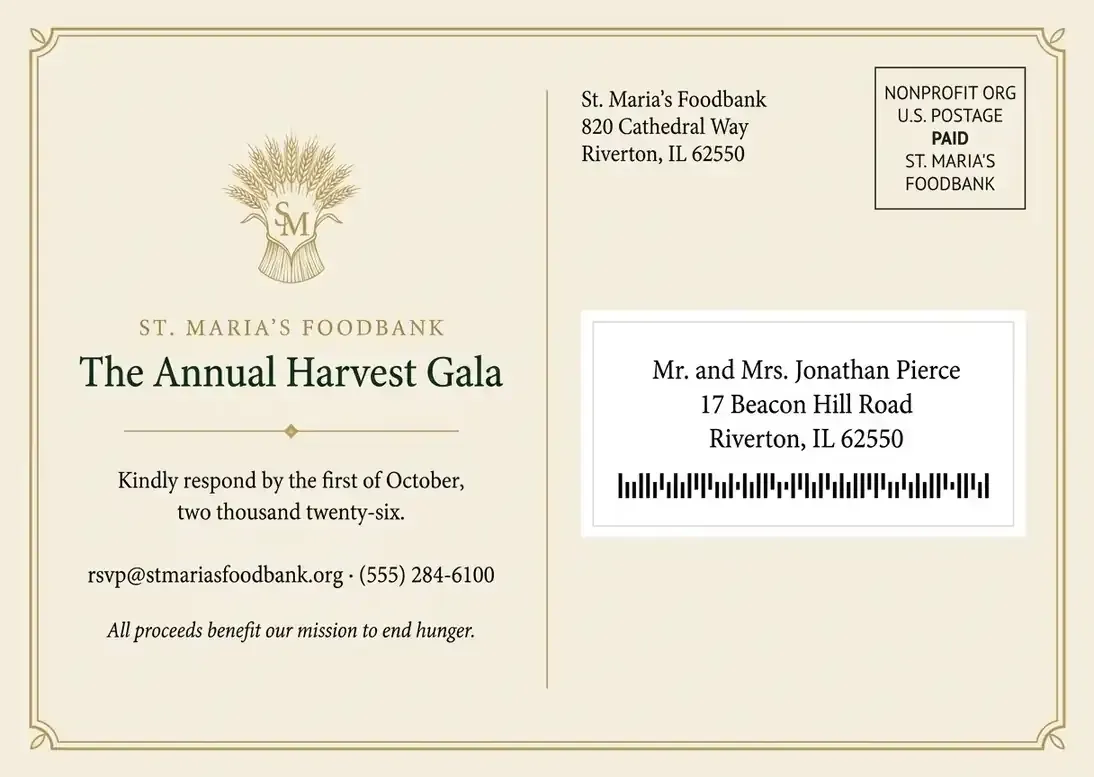
Capital campaign and event invites
Personalized letters with reply envelopes.
Built-in for Nonprofits
Everything nonprofits need to automate donor communications, stay compliant, and maximize every mailing.

IRS-compliant tax receipt template with merge fields (donor name, gift amount, date, EIN, in-kind disclosure)

Salesforce NPSP, Bloomerang, DonorPerfect, Virtuous, Neon CRM integrations

Reply envelope option (BRE) on appeal letters

NCOA address scrubbing included (saves wasted postage)

501(c)(3) discount — contact our team for eligibility and current terms.

Real handwritten upgrade for major donors (game-changer for retention)
Ready to automate your direct mail?
Start sending in minutes. Launch has no monthly platform fee or minimum; printing and postage are charged per mailing.








Pricing Pointer



Most nonprofits start on Scale ($99/mo) with the nonprofit discount. Confirm the applicable discount with the MailerBot team before selecting a plan.
Large foundations and national orgs use Command ($399/mo) for compliance reporting and SOC 2.
Simple, Transparent Pricing
Launch has no monthly platform fee or minimum. Pay for each mailing, including printing and postage. Scale and Command add a subscription for higher-volume sending and additional features.
Plan 1
Launch
(Pay-as-you-go)
Start with pay-as-you-go letters and postcards.
- Letters: 89¢ first page, 25¢ each additional page, plus postage
- Postcards (4×6): 59¢ plus postage
- Address verification (CASS + NCOA): included on every send
- API access: full REST API, SDKs for Python and JavaScript
- Sandbox/test mode: unlimited test sends, free
- Real-time webhooks: mailed, in-transit, delivered, returned
- Tracking: USPS Intelligent Mail Barcode on every piece
- Dashboard: send history, status, proofs
- Support: community + email (48hr)
- Mailout SLA: next business day
Plan 2
Scale
$99/month
Add campaigns and team tools as your sending grows.
Everything in Launch, plus:
- Letters: 69¢ first page, 15¢ each additional page, plus postage
- Postcards (4×6): 49¢ plus postage
- EDDM (Every Door Direct Mail): route-based saturation mail, design-to-delivery
- Free Targeted Residential Prospecting: search by home value, home age, occupant net worth and more.
- Automated campaigns: drip sequences, triggered sends, multi-touch flows
- Delivery confirmation: included on all pieces
- Advanced webhooks: signed payloads, retry logic, custom events
- Native integrations: Klaviyo, Shopify, Zapier, Make
- A/B testing: split test creative, offers, timing
- Team seats: up to 5 users, role-based permissions
- Support: priority email + chat (4hr business hours)
Plan 3
Command
$399/month
Coordinate larger mail programs with managed support.
Everything in Scale, plus:
- Letters: 59¢ first page, 10¢ each additional page, plus postage
- Postcards (4×6): 39¢ plus postage
- Advanced reporting: cohort analysis, attribution, ROI dashboards, exportable
- Fully managed automations: MailerBot team builds your campaigns end-to-end
- Dedicated account manager
- SSO (Okta, Google, Microsoft)
- HIPAA BAA available
- Audit logs and compliance exports
- Unlimited team seats
- Custom rate limits and dedicated throughput
- 99.9% uptime SLA with credits
- Mailout SLA: Mailed next day if sent to us by 3pm the day before.
FAQ
MailerBot provides the tax receipt template described above, with fields for donor and gift details. Your organization should review the completed acknowledgment and disclosure language for the donation before sending; a template does not replace your own compliance review.
Yes. Prepare separate donor lists by giving tier and tailor the message, ask amount and creative to each group. Review each segment and personalized proof before sending.
A 501(c)(3) discount is listed on this page. Contact the MailerBot team to confirm eligibility, the applicable rate and which plan it applies to before budgeting your campaign.
The handwritten upgrade described on this page can be used for major-donor outreach. Confirm the available format, signature or handwriting requirements, pricing and lead time with the team before scheduling an executive director’s note.
Keep your donor CRM and mailing list current. Review returned-mail information, correct addresses and suppress recipients who should no longer be mailed before the next campaign. Address scrubbing can help reduce waste, but it cannot guarantee every piece will be delivered.