Skip to content

Home Services Postcards: 6 Proven Ways To Win More Local Customers

Insights
08.03.26

Insights

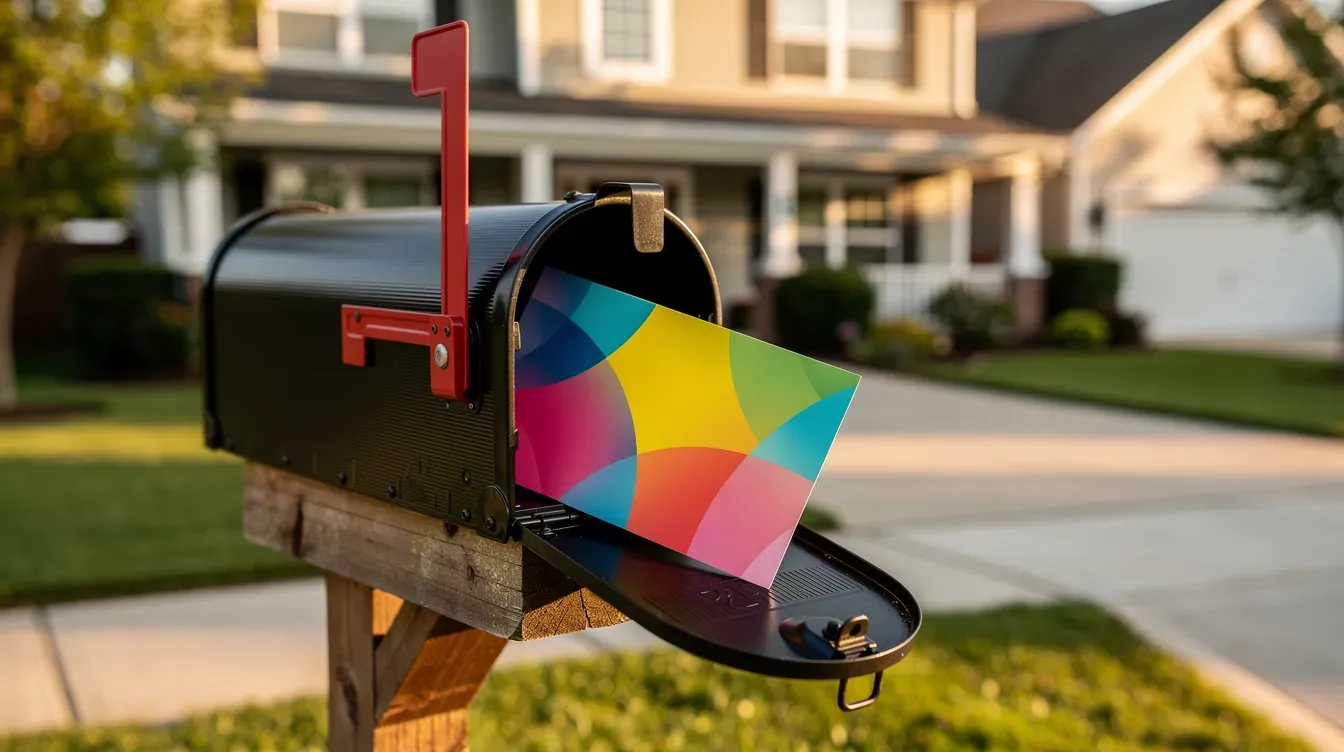
casing a vibrant home services marketing campaign aimed at attracting new customers. The postcard represents a cost-effective direct mail strategy for home service companies to reach local homeowners.

Key Takeaways

  • Direct mail postcards can deliver up to 945% ROI for home service businesses, making them one of the most cost effective marketing channels available when campaigns are well targeted.
  • This article covers the 6 best uses for home services postcards: prospecting new neighborhoods with EDDM, reactivating past customers, upselling maintenance plans, seasonal promotions, new-mover outreach, and jobsite radius mailings.
  • MailerBot handles design, printing, mailing, and Every Door Direct Mail (EDDM) logistics so home service owners never have to visit the post office or manage address lists.
  • MailerBot reduces prospecting costs with low-cost postage options and USPS route targeting, letting you blanket ideal local streets and ZIP codes to reach new customers.
  • MailerBot adds uniquely trackable QR codes to every campaign so you can see exactly who is scanning your offers and which postcards are generating calls and bookings.

Why Direct Mail Postcards Still Win In A Digital World

Your future customers are buried in email promotions and scrolling past digital ads without a second thought. Meanwhile, a full color postcard sitting in someone's mailbox gets picked up, flipped over, and read. That simplicity is what makes direct mail postcards so powerful in today's digital world.

Home services businesses like HVAC, plumbing, lawn care, pest control, roofing, cleaning, and remodeling depend almost entirely on local homeowners. That geographic focus makes postcards especially effective because you can target specific neighborhoods or postal routes instead of casting a wide net and hoping. Physical mail has higher visibility than digital ads, and receiving it enhances local establishment and legitimacy for your business.

The numbers back this up. Postcards can achieve response rates as high as 9% when mailed to a house list, and even cold prospecting campaigns regularly pull 2–5% response rates. Over 17 million home services postcards were mailed in 2021 alone. Compare that to cold email or display ads that often convert below 1%, and the math becomes obvious. Postcards are also cost effective compared to TV and billboard campaigns, making them accessible even on a modest budget.

Postcards also have a longer shelf life than digital ads. They get stuck to refrigerators, pinned to cork boards, or left on kitchen counters for weeks, keeping your brand top of mind long after a Facebook ad disappears from someone's feed.

The rest of this article walks you through the top six postcard use cases for any home services marketing campaign and shows how to combine them with digital marketing for even stronger results.

casing a vibrant home services marketing campaign aimed at attracting new customers. The postcard represents a cost-effective direct mail strategy for home service companies to reach local homeowners.

Understanding The Basics: What Makes A Home Services Postcard Work

Before diving into specific campaigns, you need to understand the core ingredients that separate a high-performing postcard from one that goes straight to the recycling bin. Effective postcards feature clear and compelling calls to action, and every element on the card should earn its place.

Here are the must-have elements:

  • Headline that hits a nerve. Lead with an urgent problem or desire: "AC Not Cooling? We Can Be There Today" or "Clogged Drain? $49 Camera Inspection This Week Only." Postcards should contain a clear headline and visual elements to engage recipients.
  • Specific offer. A clear offer on postcards can drive immediate customer action. Skip vague "10% off" language and try "$79 Furnace Tune-Up" or "Free Roof Inspection + $500 Toward Replacement."
  • Call to action with multiple contact options. Phone number, URL, and a scannable QR code. Make it effortless to respond.
  • Real project photos. Before-and-after shots of roofs, lawns, bathrooms, or driveways instantly signal what your home service company does.
  • Trust signals. License numbers, years in business ("Serving Denver Homeowners Since 2011"), review snippets ("4.8★ on Google from 326 Local Reviews"), and certification badges (NATE, BBB A+).
  • Urgency. A time limit like "Book by October 31, 2026" encourages faster responses from potential customers.

Pair all of this with trackable QR codes so you can measure results precisely, and you have a postcard that works.

The 6 Best Uses For Home Services Postcards

The six use cases below cover the full customer lifecycle: finding new customers, bringing old ones back, and keeping current clients loyal. Each is proven across trades like HVAC, plumbing, pest control, lawn care, landscaping, exterior cleaning, electrical, and remodeling.

You can use these individually or combine them into a full-year direct mail plan. The key is to start with the use case that solves your most pressing problem today, then layer in others as revenue grows.

Use Case 1: Prospecting New Neighborhoods With EDDM

Every Door Direct Mail (EDDM) is a USPS program that lets you mail postcards to every home on a carrier route without needing individual addresses. You select ZIP codes and carrier routes, print and bundle your cards, and the post office delivers them to every door.

This makes EDDM ideal for prospecting. HVAC, roofing, pest control, and lawn care companies can blanket specific streets in a local area where homes share similar ages, values, or lot sizes to find new customers efficiently. Postcards allow businesses to target specific neighborhoods or postal routes, which is exactly what EDDM is built for.

MailerBot handles the heavy lifting: route selection, printing, bundling, paperwork, and entry into the USPS system. You never have to interact with the post office directly. MailerBot's low-cost postage options for prospecting campaigns reduce the per-piece cost, making it feasible to mail 1,000–5,000+ postcards into a brand-new market.

Example: A pressure washing company targets a 10-route EDDM drop in April with a "Spring Driveway & Siding Cleanup – 20% Off for Your Street" offer timed for peak demand. Each card carries a trackable QR code that drives prospects to a quote request page, with every scan tied to the specific EDDM campaign and route so the owner knows which streets are responding.

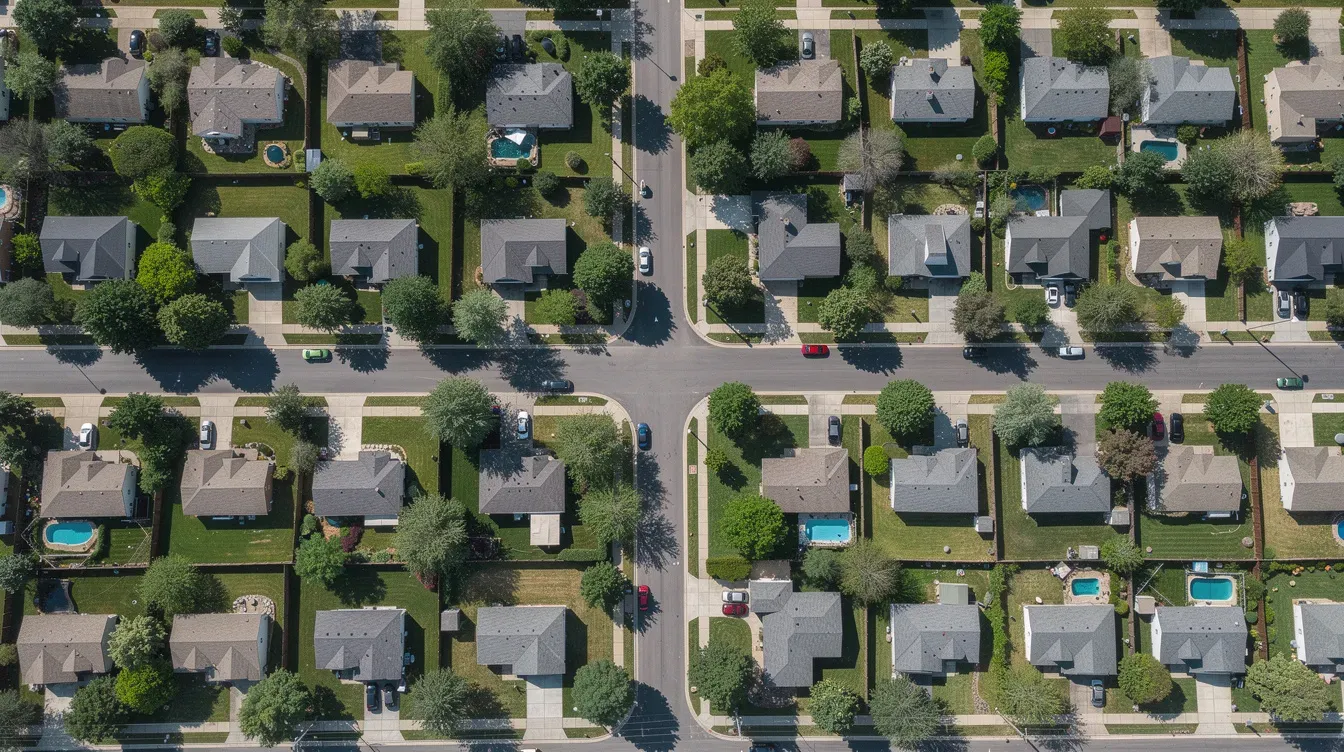
An aerial view of a sunny suburban neighborhood showcases uniform houses with manicured lawns and tree-lined streets, creating a serene atmosphere. This picturesque scene reflects the ideal setting for home services marketing campaigns targeting new homeowners and local residents through direct mail postcards.

Use Case 2: Reactivating Past Customers & Dormant Leads

Past customers are your highest-converting, lowest-cost audience, but they often slip away when nobody follows up after the last job. Postcards can achieve response rates as high as 9% for house lists, making reactivation one of the most profitable things you can do with direct mail.

Trigger mailings by last service date. If someone had a water heater check 11 months ago, an annual backflow test, or a duct cleaning done two years ago, that data tells you exactly when to reach out.

Example: An "It's Been A While" postcard for an HVAC tune-up reminds customers who had a repair in summer 2024 to schedule maintenance before summer 2025. Include "welcome back" incentives like a small discount, priority scheduling, or extended warranty that's only available for returning customers who respond by a specific date.

MailerBot can import your existing customer list, print names and addresses, and add uniquely trackable QR codes per campaign to see how many dormant customers are reactivating. Consider pairing this direct mail campaign with a light-touch digital marketing follow up, like a matching email or social ad creative, for customers who are also reachable online.

Use Case 3: Selling Maintenance Plans & Service Agreements

Maintenance and membership plans are recurring revenue engines for any home services business. Think twice-yearly HVAC tune-ups, quarterly pest control, monthly pool service, or year-round lawn care programs. The challenge is that these plans feel abstract until you make them tangible.

Postcards solve that. A 6×9 full color card can show a simple chart listing what's included, plus a bold price or "from $19/month" starter tier. Benefit-driven headlines like "Never Worry About Your AC Failing on the Hottest Day Again" outperform generic pitches.

Example: An HVAC company mails a postcard in September offering a "2026 Comfort Club" with two annual tune-ups, priority service, and 15% off repairs. Short bullets compare the plan cost to what a single emergency call costs. One case study of a plumbing contractor showed that mailing 1,500 cards to past customers generated a 4.2% response, converted 41% into annual maintenance plan customers, and produced $4,394 in first-year revenue on a $1,380 investment, roughly 218% ROI.

MailerBot can generate unique QR codes that lead directly to an online membership signup page, tracking which neighborhood or list segment is joining at the highest rate. Encourage quick responses with a deadline: "Enroll before November 15, 2026 and get your first tune-up free."

Use Case 4: Seasonal Promotions That Fill Your Calendar

Most home service demand is seasonal: spring for landscaping and pest control, summer for AC, fall for heating and gutter cleaning, and pre-winter for insulation and weatherization. Home services postcards are effective for seasonal promotions like AC tune-ups, spring cleaning specials, and fall furnace safety checks.

Mailings increased 58% from February to March as companies rush to get ahead of spring demand, and the busiest month for mailings was May. Consistent mailing boosts recognition and keeps your business top of mind when homeowners are ready to purchase.

Map out a simple 12-month plan. For a lawn care company, that might be a March "Spring Clean-Up" drop, a May "Summer Lawn Program" push, and a September "Fall Aeration & Overseeding" offer. Use bold, seasonal imagery (lush lawns, snow on roofs, blooming trees) and color palettes that visually anchor the timing and serve as seasonal reminders.

MailerBot can schedule direct mail in advance, batch-printing and mailing at optimal dates with EDDM or targeted lists so you don't have to manage calendars manually. Add seasonal QR codes for each wave (e.g., "Spring-2026-Lawn" vs. "Fall-2026-Gutter") so responses from each timing can be measured separately. Plan ahead, and you'll never scramble to fill your calendar.

Use Case 5: New-Mover & New-Homeowner Welcome Campaigns

New homeowners who moved in during 2025 or 2026 haven't yet chosen a preferred plumber, electrician, pest control company, or cleaning service. Being the first to reach their customer's mailbox puts you at the front of the line.

Design a "Welcome to the Neighborhood" postcard with a warm tone, a photo of local landmarks, and a bundle of offers: free safety inspection, discounted first treatment, or a spring cleaning discount. Adding helpful local info like key municipal numbers, trash pickup tips, or a quick "new homeowner checklist" increases the chances the card is kept instead of tossed.

This strategy works across trades. An HVAC company can offer tune-ups for homes built before 2010, a plumber can pitch inspections for older properties, and a security company can target new families.

One case study of a Midwest new-mover campaign showed $98,267 in revenue from just $6,382 invested, roughly 15× return, with a cost per booked lead of about $35.25. MailerBot can work from up-to-date new-mover lists and add unique QR codes for each month's batch so you can see which move-in cohorts respond best.

Follow up with at least two touches: an initial welcome postcard within 30 days of move-in and a second reminder 60–90 days later if they haven't responded.

Use Case 6: Jobsite Radius Mailings & Door Hanger Follow-Ups

Whenever you complete a high-visibility job like a new roof, exterior paint, turf install, or driveway cleaning, you can win more work on the same street with localized postcards. This "We Just Helped Your Neighbor" approach is one of the highest-ROI tactics in postcard marketing.

Mail to 25–100 homes around each recent job using language like "See our work at 123 Oak Street" (with the homeowner's permission). Combine this with physical door hangers: crews leave branded door hangers on adjacent homes the day of the job, then a postcard follows 3–7 days later for a one-two punch.

Example: A roof cleaning company in Tampa completes a job in March 2026 and mails a radius campaign with before-and-after photos of that exact house's roof on the postcard. One case study from PeachTree Restorations reported over $398,000 in roofing jobs booked from radius postcards around completed work, an 11× return on investment.

MailerBot can set up simple workflows: after you mark a job complete and enter the address, MailerBot finds homes in a defined radius, prints, and mails a small batch with low-cost postage. Each radius batch carries its own QR code, letting you see which neighborhoods around which jobs produce the highest response and referrals.

Designing High-Converting Home Services Postcards

Design quality directly influences how homeowners perceive your service quality. A cheap-looking card signals cheap work.

Key design best practices:

Element

Best Practice

Photos

High-resolution project images; using high-quality imagery builds trust

Layout

Postcards should be designed with simple visual hierarchy for clarity; plenty of white space

Fonts

Easy-to-read, sized for older homeowners

Colors

High contrast colors help important message elements stand out; consistent brand palette

Headline

Bold, top of card, problem-focused

Offer & CTA

Lower right, near the QR code for natural scanning

Social proof

Including social proof like star ratings and review counts can enhance credibility

Branding

Icons (thermostat, faucet, leaf, lightning bolt) that signal the trade

Include a small "About" blurb with years in business, your service area list, and a short testimonial. Businesses in home services prefer custom designs over templates. In fact, only 15% of home services businesses used template designs in 2021, and custom postcard designs can significantly boost marketing effectiveness. That said, MailerBot can provide professional templates for common home services (AC tune-ups, drain cleaning, mosquito treatment, power washing) as a starting point, which you can then customize to match your brand.

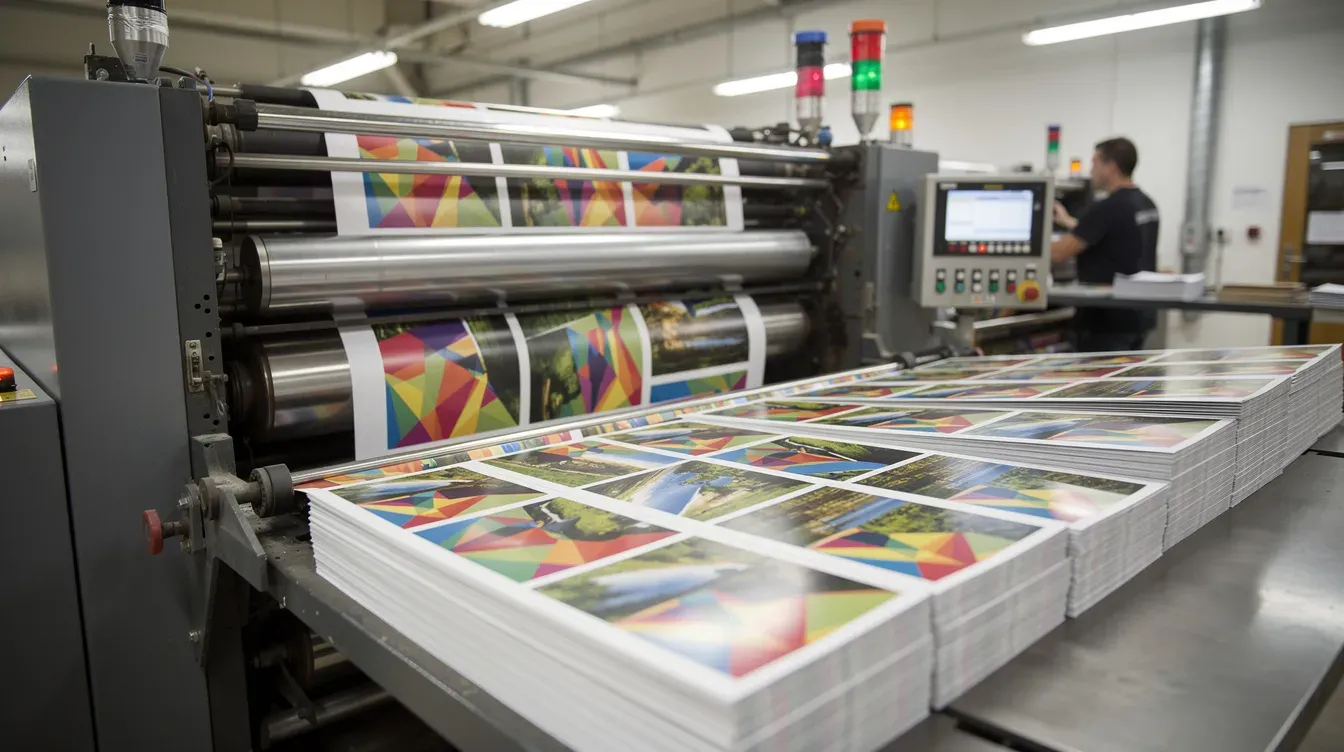
The image shows a commercial printing press actively producing a batch of full-color oversized postcards, showcasing vivid imagery that is ideal for direct mail marketing campaigns aimed at attracting new customers for home services businesses. The postcards, designed with professional templates, are ready to be delivered to customers' mailboxes, enhancing the effectiveness of home services marketing efforts.

Targeting & Mailing Options: EDDM, Lists, And Hybrid Approaches

Three main targeting methods exist for home services direct mail postcards:

  • EDDM - Blanket coverage of entire neighborhoods or ZIP codes. Best for prospecting. Resident/occupant lists were used by 15% of businesses.
  • Consumer/purchased lists - Target by income, home value, age, or homeowner status. Consumer lists are the most used mailing type at 37%. Targeted mail campaigns typically yield better results than broad approaches.
  • Your own lists (provided/house lists) - Past customers and leads you already have. Provided lists are the second most used mailing type at 27%.

Use EDDM when you're entering a new market. Use purchased lists when you want precision. Use your own lists for reactivation and membership campaigns. A hybrid approach works best: EDDM for a base layer plus targeted re-mailings to high-response zones.

At higher volumes, low-cost postage tiers kick in. Mailing at least 500–1,000 cards at a time often improves cost per lead, and 41.86% of businesses mailed 1,000 to 2,499 postcards at a time.

Example: A pest control company combines a 3,000-piece EDDM drop with a 500-piece targeted list of past customers for a spring ant and spider treatment campaign. MailerBot manages address printing, bundling, postage, and USPS submission so owners can stay focused on running crews instead of sorting mail.

Tracking Results With MailerBot's Unique QR Codes & Analytics

The biggest shift in modern direct mail marketing is the ability to track exactly what happens after one postcard lands in the mailbox, similar to how you'd track digital campaigns. Incorporating tracking methods helps measure conversion rates for postcards and removes the guesswork.

MailerBot adds uniquely trackable QR codes to each campaign, and even each segment or route, that send visitors to a dedicated landing page or online booking form. Every scan is recorded with a timestamp and basic device data, letting you see which postcards, neighborhoods, or offers are driving the most interest. QR codes can increase response rates by 20–30% compared to cards without them.

Pair QR tracking with unique promo codes or dedicated phone numbers printed on the postcard to capture conversions from customers who prefer calling.

Example: An electrical company runs two different offers (panel inspection vs. whole-home surge protection) with separate QR codes and discovers that panel inspections generate 3× more scans and bookings. That data helps refine future campaigns and ensures budgets go toward the message that converts best. Website visitors lists accounted for 17% of mailings, showing that many businesses are already connecting offline mail to online behavior.

Integrating Direct Mail Postcards With Digital Marketing

Home services marketing works best when postcards, digital ads, and email or text follow ups reinforce one another. Postcards are usually more effective when part of a broader marketing strategy than when used in isolation. In fact, 34% of home services businesses integrated digital ads with mailings, and integrated campaigns yield 39% more attention than single-media campaigns.

Direct mail can warm up a cold audience, then you retarget website visitors and QR code scanners with matching Google, Facebook, or Instagram ads. Use the same headline, colors, and offer from the postcard in your digital campaigns so homeowners recognize the brand across marketing channels.

Build simple follow up automations: when someone scans a QR code and fills out a form, trigger a confirmation email, a text reminder, and possibly a second postcard if they don't book within a set time. Website to Mailbox technology can even send automated postcards within 24 hours of a website visit, keeping your company in front of warm prospects. Postcards combined with digital ads can significantly boost ROI across the board.

Multi-channel flow example: EDDM postcards mailed in March, retargeting ads in April for scanners and site visitors, and automated mailings of reminder postcards in May to non-bookers. This sequence keeps a brand visible through multiple touches and generates more customers than any single channel alone.

Free Marketing Kit & Getting Started With MailerBot

You don't have to figure all of this out alone. MailerBot offers a free marketing kit that includes sample home services postcards, design checklists, EDDM route planning tips, and a simple ROI calculator to help you plan your first postcard campaign.

Here's a quick-start process:

  1. Choose your primary service (HVAC, plumbing, lawn care, pest control, cleaning, etc.)
  2. Pick one of the 6 use cases from this article
  3. Request a MailerBot strategy review to get customized campaigns tailored to your market

MailerBot's team of direct mail experts can recommend postcard sizes, help you choose between EDDM and targeted lists, and set up uniquely trackable QR codes that plug into your existing website or booking tools. Start with a manageable test, say 1,000–2,000 postcards to a single neighborhood, to build confidence before scaling.

With MailerBot handling design, printing, delivery, and analytics, home service owners can book more jobs with less effort and more predictable lead flow. Reach out for your free marketing kit and get your first campaign in the mail.

Ready to Automate your direct mail?

Start sending in minutes. No monthly fees, no minimums.

These questions address the practical concerns home service owners typically raise when they first consider postcard marketing.

Most home services businesses should start with at least 500–1,000 postcards per drop to a well-chosen area so postage discounts apply and results are statistically meaningful. Sending 500–1,000 postcards at least three times a year is recommended, as repeating to the same area 2–3 times over 60–90 days typically outperforms a single mailing of the same total volume. MailerBot can analyze early campaign data like QR scans, calls, and bookings to recommend whether to scale up volumes or adjust targeting.

Common sizes like 4×6, 6×9, and 6×11 all work, but larger formats tend to stand out more in the mailbox and provide more space for photos and offers. A 6×9 card is a strong default for most HVAC, plumbing, lawn care, and pest control campaigns, with 6×11 reserved for premium offers or competitive markets. MailerBot can recommend sizes based on your budget, postage options, and how much content needs to fit without appearing cluttered.

With a ready list and a clear offer, a direct mail campaign can move from concept to in-the-mail within 7–14 days. The breakdown: design (1–5 days depending on revisions), printing (2–4 days), and postal processing plus delivery (typically 3–7 business days). Once MailerBot has a design and data on file, repeat mailings and seasonal campaigns can be turned around even faster.

Absolutely. Postcards and digital ads tend to boost each other. Direct mail can drive first-time awareness while search and social ads capture homeowners who later look the business up online. Many clients search for a company name only after seeing it repeatedly in the mailbox, on trucks, and in their social feeds. MailerBot's QR code tracking makes it easy to measure results and see the incremental leads that postcards add on top of existing digital marketing.

Per-piece costs for printing plus postage can often fall between a fraction of a dollar and just over a dollar depending on size, volume, and postage class. A test budget should be sized to acquire at least 10–20 new jobs, then reinvest a portion of those profits into larger, ongoing campaigns. MailerBot can provide a detailed quote and simple break-even analysis so you know exactly how many leads you need for a campaign to pay for itself.